1. Introduction
Medical teams and healthcare procurement specialists must look far beyond price and availability. When assessing safety IV cannula manufacturers, buyers must evaluate precision design features, material biocompatibility, safety shielding mechanisms, and international regulatory conformity before selecting a supplier. Understanding how individual design details influence clinical usability allows hospitals to provide superior care to every patient.
2. Understanding the Role of IV Cannula Design
An IV cannula is a slender, flexible catheter inserted into a peripheral vein to provide vascular access. Key components include the stainless steel needle, flexible catheter tube, fixation wings, injection port, and needle safety shield.
A well-designed IV cannula minimizes tissue trauma, prevents vein irritation, maintains stable positioning, and offers effortless handling for clinicians. The ideal cannula choice depends on the patient's age, vascular condition, intended infusion duration, and treatment viscosity.
3. Important Design Features That Influence Patient Care
Fine engineering details make an immense clinical difference during cannulation. Healthcare professionals prioritize the following core elements:
A back-cut, silicone-lubricated needle bevel enables smooth vein penetration with minimal resistance and lower patient pain.
Seamless transition between needle and catheter tip prevents peel-back or bunching during vein entry.
Optically clear flashback chamber confirms instant venous entry, eliminating guesswork and repeated vein puncture attempts.
ISO-compliant color coding ensures instantaneous identification of cannula gauges (14G to 26G) in critical emergency settings.
For facilities transitioning to safety devices, examining passive and active needle-shielding mechanisms is vital to protect clinical staff from accidental needlestick injuries (NSIs) and bloodborne pathogen exposure.
4. How Cannula Design Supports the Patient Journey
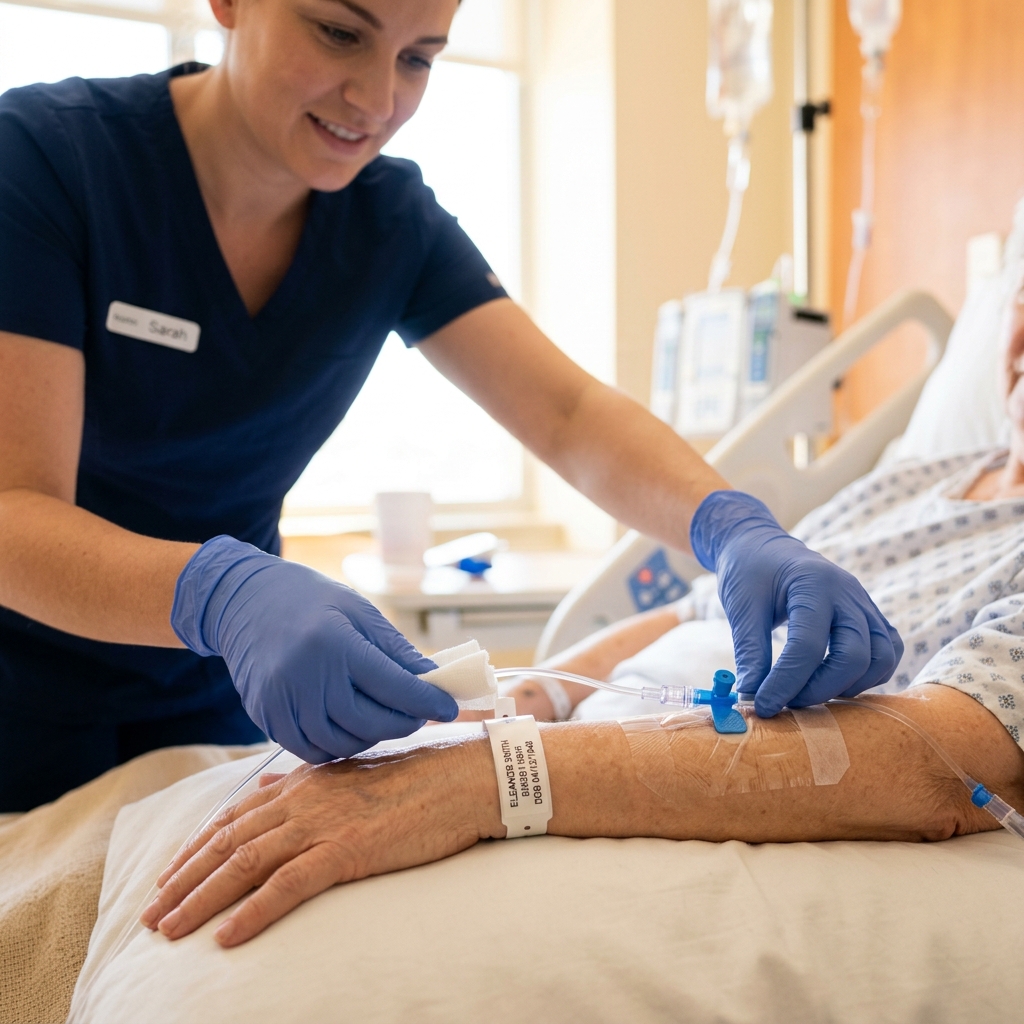
A patient's vascular therapy encompasses multiple phases: vein selection, needle insertion, catheter advancement, wing fixation, medication injection, and safe disposal. Ergonomic flexible wings facilitate secure tape or dressing adhesion, preventing accidental catheter dislodgement or phlebitis.
In models equipped with integrated injection ports (such as Pluswin or Plusflon), a one-way silicone non-return valve permits simultaneous medication boluses without disturbing the primary infusion line.
5. Choosing the Right IV Cannula for Clinical Requirements
Selecting the appropriate device requires matching clinical demands with patient physiology:
- Identify Treatment Type: Determine whether rapid blood transfusion (14G–18G), standard fluid hydration (20G–22G), or gentle pediatric therapy (24G–26G) is needed.
- Verify Catheter Material: Choose high-performance PTFE or medical polyurethane (PUR), which softens at body temperature for extended indwelling comfort.
- Inspect Safety Mechanisms: Evaluate whether self-activating safety clips (such as Pluski Safe) fully encapsulate the sharp needle tip upon retraction.
- Ensure Infusion Line Compatibility: Confirm standard 6% luer lock connection to standard infusion sets and extension tubes.
- Confirm Regulatory Documentation: Ensure sterile barrier validation, pyrogen-free testing, and ISO 10555 compliance.
6. Common Challenges and Practical Solutions
Addressing Vascular Complications:
Challenge: Hematoma and missed insertions in patients with fragile or rolling veins.
Solution: Utilize cannulas featuring dual flashback technology and ultra-sharp triple-faceted needle bevels for immediate confirmation.
Challenge: Catheter kinking during limb movement leading to infusion occlusion.
Solution: Transition to thermo-sensitive polyurethane catheters that maintain lumen patency and flex smoothly with patient movement.
7. Frequently Asked Questions (FAQs)
Q1. How does flashback technology assist during IV cannula insertion?
Flashback technology provides instantaneous visual confirmation of blood return the moment the needle enters the vein, ensuring proper catheter positioning before needle withdrawal.
Q2. What is the role of catheter material in patient care?
Catheter materials like PTFE and PUR dictate flexibility, kink resistance, and vein biocompatibility, significantly reducing vein irritation, thrombophlebitis, and extravasation risks.
Q3. Why is needle safety crucial in modern IV cannulas?
Safety mechanisms automatically enclose the contaminated sharp upon removal, eliminating accidental needlestick injuries and protecting healthcare workers from bloodborne pathogens.
Q4. What should healthcare institutions evaluate when choosing an IV cannula supplier?
Evaluate precision manufacturing standards, needle sharpness consistency, biocompatibility compliance, regulatory registrations, and stable delivery lead times.
8. Conclusion and Call to Action
Every element of an IV cannula serves a vital clinical purpose. Understanding these engineering nuances empowers hospitals, clinics, and procurement leaders to make informed choices that elevate patient comfort and caregiver safety.
Mediplus India Ltd. engineers world-class conventional and safety IV cannulas manufactured under strict cleanroom conditions with automated precision assembly.